

Description
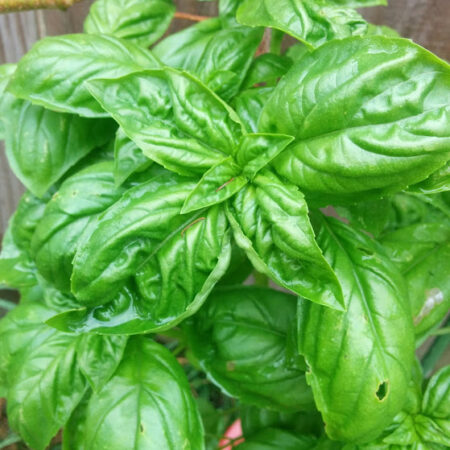
Basil (Ocimum spp.) is a diverse genus of aromatic herbs in the Lamiaceae (mint family), valued worldwide as both a culinary staple and a sacred or medicinal plant. Most basils are tender annuals or short-lived perennials that thrive in full sun and well-drained, fertile soil, with regular watering during hot weather. Originating from tropical Asia and Africa, basil has been cultivated for centuries for its fragrant leaves, which contain essential oils rich in linalool, eugenol, citral, camphor, and methyl chavicol, giving rise to distinct flavors and fragrances across the many species and cultivars.
-
Culinary uses: Fresh leaves are a cornerstone of Mediterranean, Asian, and global cuisines — for pesto, curries, teas, infused vinegars, and flavoring oils.
-
Medicinal uses: Traditionally taken as a digestive aid, mild adaptogen, respiratory herb, and calming nervine. Tulsi, or holy basil, is especially revered in Ayurveda for balancing stress and immunity.
-
Ornamental & pollinator value: Basils bring beauty to gardens with their lush foliage and spikes of white, pink, or purple flowers, which are highly attractive to bees and other beneficial insects.
This general description can cover all your Ocimum species and cultivars. Then each type can get its own short description with specifics about habit, flavor, and best use.